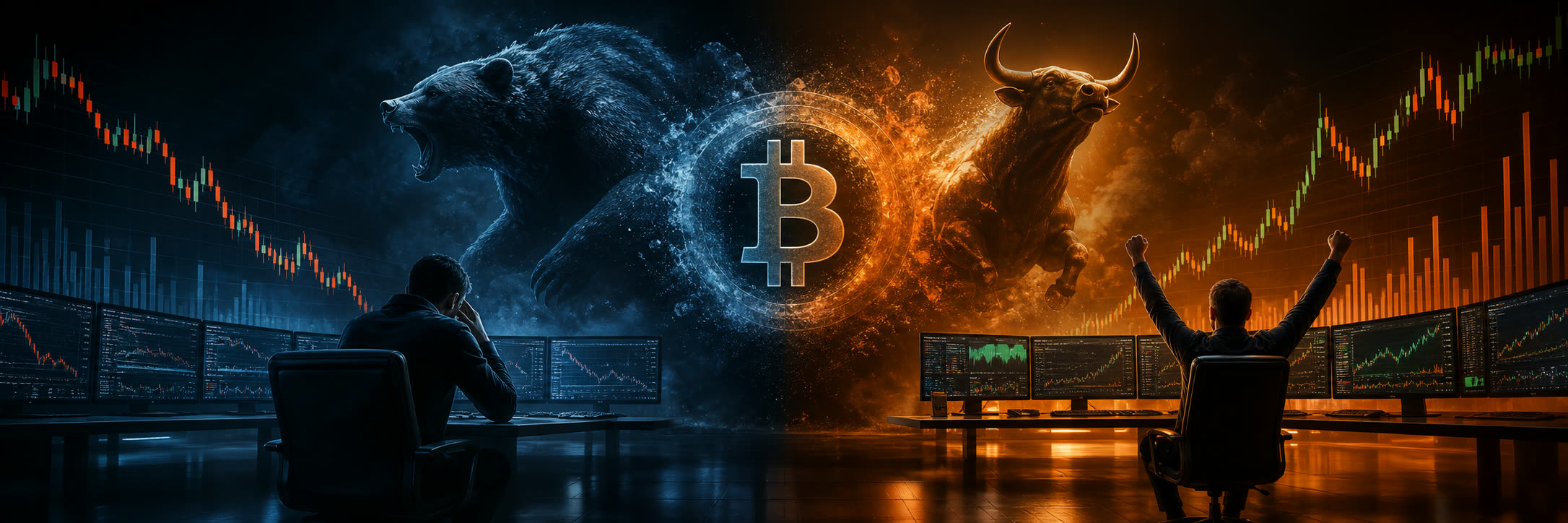
Chapter 1: Fear and Greed
Emotion is not outside the market
Fear and greed are not side effects. They are part of how markets work. A price chart is created by decisions, and decisions are made by people and systems reacting to uncertainty, opportunity and pressure. Even professional markets carry emotion because no participant knows the future with certainty.
Fear protects, but it can overreact
Fear helps people avoid danger. In markets, it can also push them to sell at the worst moment. When prices fall quickly, many traders stop asking what changed and start asking how to escape. This can create sharp selloffs where selling causes more selling.
Greed sees upside before risk
Greed is the feeling that the opportunity is too good to miss. It makes people focus on possible profit and ignore position size, liquidity, fees or timing. In a rising market, greed often feels like confidence because the chart appears to confirm every optimistic idea.
Cycles feed themselves
Fear and greed often create feedback loops. Rising prices attract buyers, which can lift prices further and create more attention. Falling prices trigger exits, which can deepen losses and create more fear. A market cycle is partly math and partly mood.
The same move can feel different
A 10% drop feels different after a long rally than after a long decline. Context changes emotion. In strong markets, people call drops opportunities. In weak markets, they call the same drops proof that everything is broken.
Indicators do not remove emotion
Fear-and-greed indicators can be useful, but they are summaries, not truth machines. They show market mood, not destiny. Extreme fear can continue. Extreme greed can continue. The value is not prediction, but awareness of the emotional environment.
The useful habit
Before buying or selling, name the emotion behind the decision. If the reason is only panic or excitement, slow down. A decision can still be correct, but it should survive one calm minute of questioning.